
Kitting Quality Assurance Checklist for Multi-SKU Bundles
Kitting quality control
Make each finished kit match the approved sample
Turn a bundle recipe into a repeatable warehouse workflow that protects accuracy, presentation, inventory, and delivery timing before finished kits move into fulfillment.
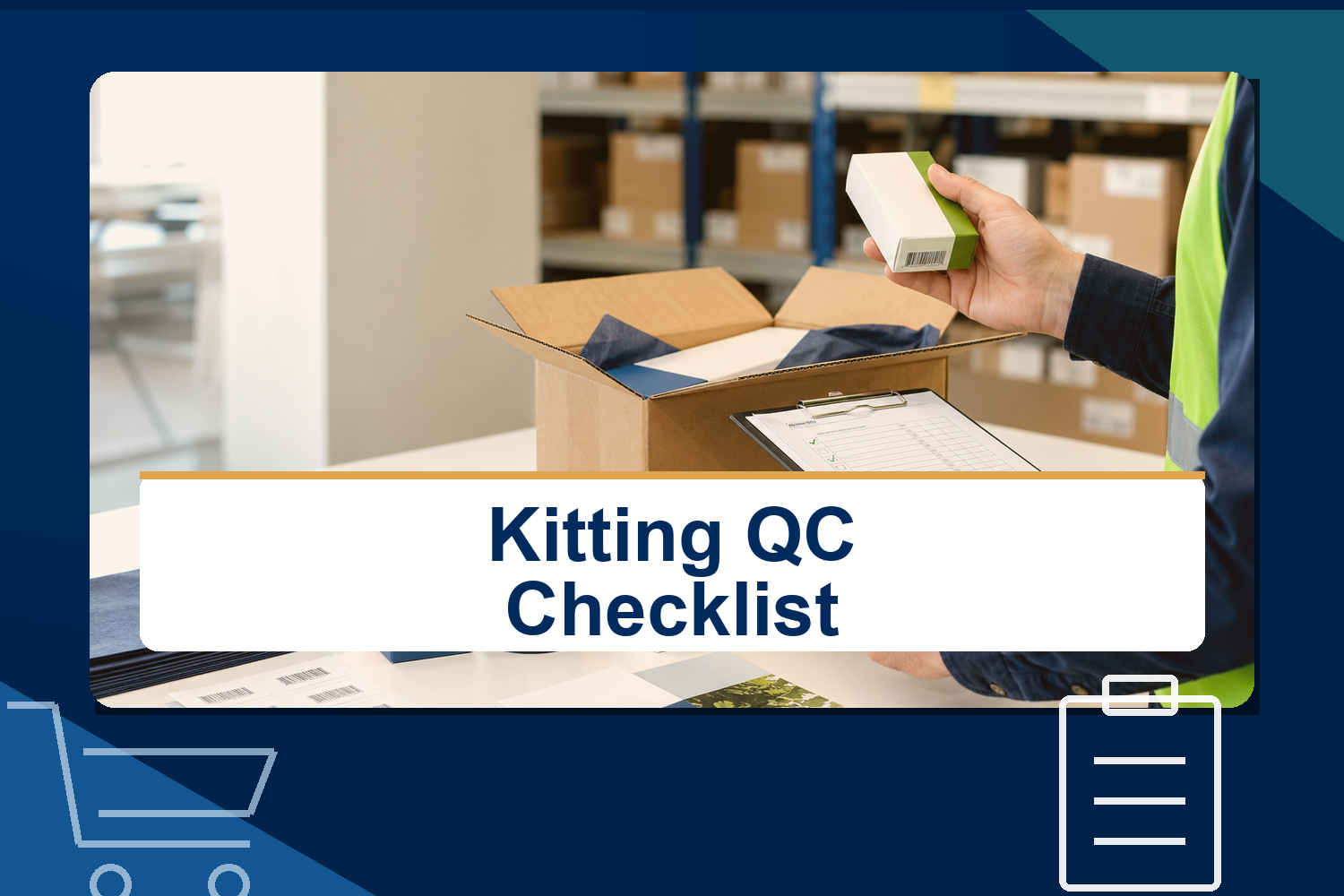
A good kit starts before the first box is packed.
Multi-SKU bundles create a better customer experience, but every added component creates another chance for a picking, labeling, packaging, or inventory mistake. Quality control has to be built into the workflow instead of saved for the final glance.
The goal is simple: give the warehouse team clear component data, a clean work area, and a repeatable verification process. That keeps finished kits consistent whether the run is 100 units or 10,000 units.
The quality-control workflow
Use these checkpoints in order. The page is designed to help a brand, supplier, and fulfillment team agree on what needs to happen before work starts.
Lock the kit bill of materials
Confirm every component, quantity, variant rule, insert, label, packaging item, and approved substitution before production begins.
Inspect inbound components
Check counts, barcode readability, carton condition, expiration dates where relevant, and visible damage before inventory reaches the kit line.
Reserve kit inventory
Separate committed components from active inventory so live ecommerce orders do not consume units needed for the bundle run.
Build the station around sequence
Stage components in the order they are packed. Keep similar SKUs apart and create a clear finished-goods area.
Approve a first finished sample
Create one complete kit and use it as the visual standard for placement, orientation, label position, protective material, and final sealing.
Sample during production
Pull checks at the start, middle, and end of the run so errors are found while they are still easy to fix.
Track every defect by type
Log missing items, wrong components, damaged product, packaging defects, label issues, and inventory mismatches so the next run improves.
Watch these high-risk details
Before you hand this to operations
- Similar-looking variants such as size, scent, color, flavor, or version
- Customer-visible inserts, instructions, thank-you cards, and promotional pieces
- Lot-controlled, fragile, serialized, high-value, or expiration-dated components
- Packaging that needs a specific fold, orientation, label location, or unboxing sequence
- Finished kit counts that must flow into inventory management and outbound fulfillment
Every kit needs a locked BOM before production starts.
The work area should make the correct action the easiest action.
Error tracking turns one-off fixes into cleaner future runs.
A blank first-piece, in-process and release record
Use one record per run and retain the approved sample or photo reference. Set inspection frequency and acceptance criteria for the product's risk; the start, middle and end checks below are checkpoints, not a statistical sampling standard.
Run identification
Run ID: ______ Kit SKU: ______ BOM version: ______
Planned quantity: ______ Component lots, where required: ______
Approved sample/photo: ______ Inspection plan: ______
First-piece approval
Inspector and time: ______
Component count, variant, barcode, placement and seal result: ______
Deviation or defect: ______ Hold or approve: ______
Approver and reference: ______
In-process check
Check time and batch/location: ______ Units checked: ______
Defect type and affected quantity: ______
Stop/hold decision and containment location: ______
Rework instruction, owner and reinspection result: ______
Final release
Accepted quantity: ______ Held/rejected quantity: ______
Component and finished-kit reconciliation: ______
Outstanding exceptions: ______
Release approver, date and record reference: ______
An unresolved wrong-component defect should not disappear into a final count. Identify the potentially affected production interval, contain those kits, approve rework and record reinspection before release.
Common questions
What causes most kitting errors?
Most errors come from unclear component data, similar-looking SKUs, poor station setup, inventory not being reserved, or missing verification before finished kits move to shipping.
Should kit inventory be separated from regular inventory?
Yes. Reserving inventory for a kit run helps prevent oversells, short runs, and situations where normal orders consume components already committed to a bundle.
When should a brand outsource kitting?
Outsourcing makes sense when bundle volume grows, seasonal campaigns strain labor, errors repeat, or the brand needs a more structured production and quality-control process.
Ready to make the workflow cleaner?
Prep Partners Group helps ecommerce, retail, marketplace, and campaign teams turn complex fulfillment requirements into dependable day-to-day operations.
Start the conversation